The Ultimate Quest: Our Journey to 5,000 Birds
We first started out doing yearly bird challenges, pushing our local limits to see what was possible in our own backyard. But as our horizons expanded, so did our ambition. We realized that the world is a much bigger aviary than we ever imagined. With over 11,000 species on the planet, we’ve set our sights on the ultimate birding benchmark: Our Journey to 5,000 Birds.
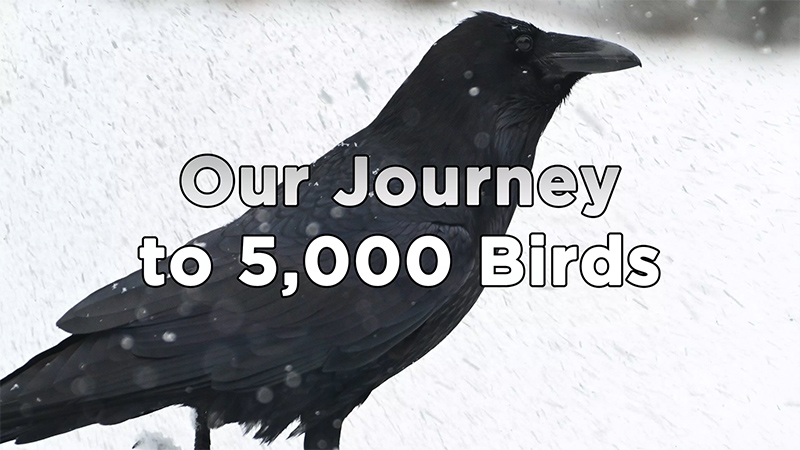
This isn’t just a number. It’s a lifelong mission to witness nearly half of all bird species on Earth. It’s about the silent forests of the Boreal, the humid jungles of the Tropics, and the windswept cliffs of the Atlantic.
One planet. Two birders. 5,000 species. We aren’t just counting feathers; we’re documenting the journey, the misses, and the “lifer” moments that take our breath away. Whether it’s a rare wanderer in Ontario or a Resplendent Quetzal in a cloud forest, every bird tells a story.
Check our progress: See our Life List
Are you coming with us?
Watch us on the BritHikesOntario YouTube Channel
The Ground Rules
To keep our quest consistent and transparent, we’ve established a few simple rules for the road to 5,000:
- The Global Standard: Starting in 2026, we use the Clements Checklist (the same standard used by eBird). It is the gold standard for global birding and ensures our list is accurate and recognised worldwide.
- Sightings Only: To count toward the 5,000, the bird must be seen. While “heard-only” records are important for birding, they don’t make it onto our list.
- The Official Count: Progress is based on Stu’s life list. Sara is part of the team for almost every mile, but since she occasionally sits out the highest cliffs or densest treks, the channel’s list will match Stu’s list.
- The Video Goal: We will always endeavour to get every species on camera for the channel. But starting with this challenge, we cannot 100% guarantee it. But we will always be honest about what we see.
- Truly Wild: We only count wild birds in their natural or established habitats as defined by The Clements List. No captive birds, no zoo residents, and no “escapees.”
- Full Species Only: We only count distinct species as defined by The Clements List. Hybrids and various subspecies are fascinating, but they don’t count as unique entries on the road to 5,000.
A Note on Taxonomy
Science is always evolving, and the Clements List evolves with it. This means our total number can fluctuate based on new research:
- The “Lump”: Sometimes two species are merged into one. For example, when “Hoary” and “Common” Redpolls were merged, our total count dropped by one.
- The “Split”: Sometimes one species becomes two. When the Herring Gull was split into “American” and “European” versions, we were “gifted” an extra species because we had seen both!
We follow the science – wherever the list goes, we follow.
Where We Stand: The 523 Milestone
We began 2026, with an official count of 523 species. It’s a number we’re happy with at this stage, representing years of early mornings, long drives, and unforgettable encounters. But in the grand scheme of 5,000, we are just getting started. You can check our progress by visiting OUR LIFE LIST
The Home Front: Ontario’s Final Treasures
Ontario will always be our home base, but as our list grows, the “lifers” here are becoming harder to find. We’ve seen most of the common residents, which means our local birding is shifting toward high-stakes chases for the province’s specialists.
Over the next few seasons, we’ll be hunting for the secretive Yellow Rail in the midnight marshes, waiting for a Sabine’s Gull to blow in on a fall gale, and heading north for the iconic lek of the Sharp-tailed Grouse. From the “biscuit-colored” Glaucous Gulls of winter to the “sewing-machine” song of the Sedge Wren in summer, we still have a few local legends to track down.
Expanding the Horizon: The 2026 Roadmap
To reach 5,000, we have to leave the familiar behind. Our journey is evolving from local weekend hikes into international expeditions across the world’s most diverse biomes.
- The Humid Tropics: This year, we are heading to Costa Rica to immerse ourselves in one of the most bird-rich landscapes on the planet. We’ll be trading our parkas for binoculars in the cloud forests and lowland jungles.
- The Icons and the Elusives (The UK): Having already seen many of the common British species, our return to the UK is about quality over quantity. We’ll be searching the West Midlands for the more elusive countryside residents before moving on to the legendary marshes of Norfolk. This leg of the journey is about the “high-value” specialists… the charismatic icons of the British coast and reedbeds that have eluded us until now.
- And Beyond: While these are our confirmed stops, the quest is only limited by time and the birds themselves. Whether it’s the high Andes or the African savannah, the quest will eventually take us wherever the “lifers” are.
A New Way to Travel
This challenge changes how we see the world. It’s no longer just about visiting a country; it’s about visiting an ecosystem. We’ll be documenting the shift from “casual travel” to “expedition birding,” sharing the logistics, the landscapes, and the incredible biodiversity of our planet.
The road to 5,000 is long, and the terrain is unpredictable… but that’s exactly why we’re doing it.
Enough thinking. Time to find some birds!
Help Us
Our chances of bringing 5,000 birds to our viewers depends on a few things. Good health, YouTube being around for a few more years, nothing bad happening in our “real lives” outside of YouTube and probably a lot of other variables.
It also depends upon our YouTube Channel continuing to grow and the very generous support of our MEMBERS. Without the support of our members, the channel may not exist. YouTube only pays us 1c per view. Our Members help us further.
If you find value in our videos, please consider joining our membership program called “The Hide”. You also get extra benefits as a member. See bottom of page for more details.
If you would rather make a one off donation to support us, you can do that here.
