Where To Find Owls: The Complete Ontario Guide
There is something undeniably magical about locking eyes with an owl. They are the ghosts of the Ontario woods: silent, elusive, and masters of vanishing into plain sight. Finding one feels less like birdwatching and more like a secret being shared between you and the forest. Of course, the reality of “owl prowling” is often a little less poetic. It usually involves frozen toes, stiff necks, and the crushing realisation that the “owl” you’ve been tracking for twenty minutes is actually just a very convincing clump of pine cones! But when it finally happens? It’s worth every second of the chill.
To help you turn those empty trees into unforgettable encounters (and perhaps save you some frostbite), we’ve put together this complete guide to every owl species found in our province. We’ll go through them, species-by-species in this article, but you can also watch our YouTube video about where to find Owls, below.
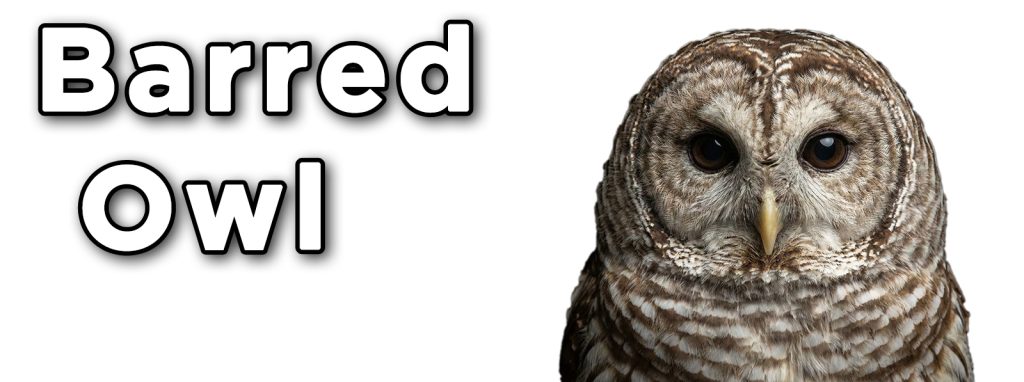
Name: Barred Owl (strix varia)
Activity: Mostly nocturnal, but often dawn & dusk. Active during the day during winter.
Best Time Of Year: Winter & Early Spring due to daytime hunting.
Habitat: Mature mixed or deciduous forests, but they insist on having “wet feet.” Look for them in swamps, riparian zones, and deep woods near marshes.
Where to Look: Barred Owl often perch to snooze or scan for prey. Scan the mid-level horizontal branches of large trees, particularly near the edges of a clearing or water source. They often watch the ground intently, waiting for prey to move.
If you find yourself staring back at an owl that looks like a giant, flying teddy bear, you’ve likely found a Barred Owl! They are unique among our typical eastern owls because they have deep, dark brown eyes rather than the piercing yellow stare of a Great Horned or Snowy. This gives them a deceptively gentle, almost soulful expression – but the voles of Ontario do not find them gentle!
While they often hunt small mammals, they are actually opportunistic connoisseurs of the swamp. They are one of the few owls that will happily wade into shallow water to catch crayfish, frogs, and even fish. They are quite sedentary birds; unlike the Snowy or Boreal owls that travel thousands of kilometres, a Barred Owl might spend its entire life within a few kilometres of where it hatched, if there is food availability.
The best time to find these owls is during the winter or just into spring. There is less leaf cover, but the owls are also more active. At this time of year, they hunt more often during the daytime when food is a little more scarce, or there is more snow cover.
Extra Ontario Specific Tips To Find This Owl
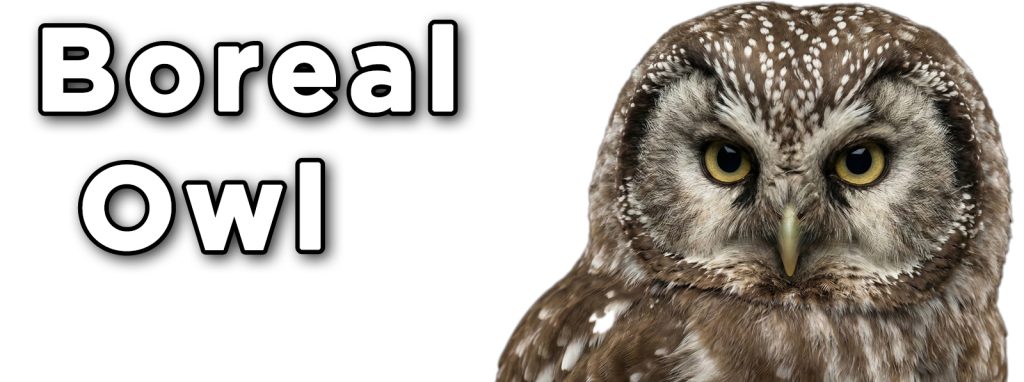
Name: Boreal Owl (aegolius funereus)
Activity: Strictly Nocturnal.
Best Time of Year: Winter (specifically during “irruption” years when food scarcity drives them south).
Habitat: The deep, dark Boreal forest of the north. When they wander into southern Ontario, they seek out similar cover: dense conifer plantations, cedar groves, or thick stands of spruce.
Where to Look: They typically roost during the day in very thick cover, usually perched close to the trunk (like a Saw-whet Owl) of a spruce or balsam fir to stay warm and hidden. They are often found lower than you might expect – sometimes just above eye level. They are masters of finding the spots that hide them in shadow.
For many Ontario birders (ourselves included), the Boreal Owl is a true “nemesis” bird. They are the nomads of the owl world, moving vast distances across the northern wilderness in search of red-backed voles. Because they live in such remote, human-free environments, they often lack the fear of people that southern owls have developed. If you are lucky enough to find a roosting Boreal Owl, it may appear incredibly tame, often just staring back at you with a sleepy expression. This isn’t friendliness; it’s a combination of energy conservation and simply not knowing that humans can be trouble.
Visually, they are a step up in size from the Saw-whet Owl, but still small and stocky. Check out the picture above. The key giveaway is the “frames” on their face. A distinct black border around their facial disc that gives them a surprised, wide-eyed look, along with white spots on their forehead (unlike the streaked forehead of a Saw-whet).
Extra Ontario Specific Tips To Find This Owl: Ummm… We haven’t seen this one yet! It’s our owl nemesis and the only one we haven’t seen in Ontario (plus the super rare Barn Owl). You generally have to travel north to see these, although they do very occasionally come further south. There was an irruption in 1996, where several could be seen. If you’re extremely lucky, the do show up in Algonquin Park and similar locations where boreal forest begins to take hold.
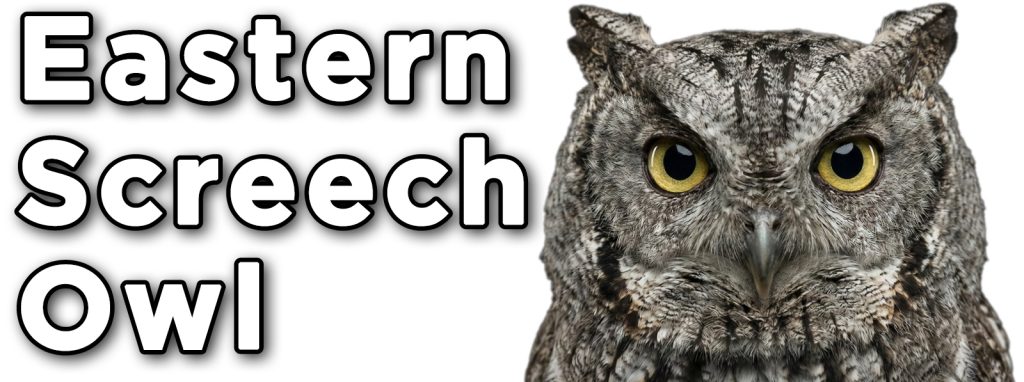
Name: Eastern Screech-Owl (megascops asio)
Activity: Nocturnal (may bask during daylight)
Best Time of Year: Winter (especially sunny but cool days)
Habitat: Extremely varied – anywhere with mature trees with cavities.
Where to Look: It’s often better to look for tree cavities than the owl directly!
If there was an award for “Best Hide-and-Seek Player,” the Eastern Screech-Owl would probably win. These pint-sized owls come in two colour morphs – Red and Grey (pictured). Both offer very impressive camouflage. When they are roosting against a tree trunk or tucking themselves into a cavity, they can flatten their feathers and stretch their bodies to mimic a broken branch or a piece of jagged bark. You have likely walked past dozens of them in your lifetime without ever knowing it.
Despite the terrifying name, they don’t actually screech. Their primary call sounds more like the descending whinny of a small horse. They are feisty predators for their size; while they mostly eat large insects, mice, and voles, they have been known to take down birds larger than themselves. Screech Owls are adaptable enough that they will happily accept a man-made nest box. Our video includes shots of a Screech Owl using one!
Extra Ontario Specific Tips To Find This Owl
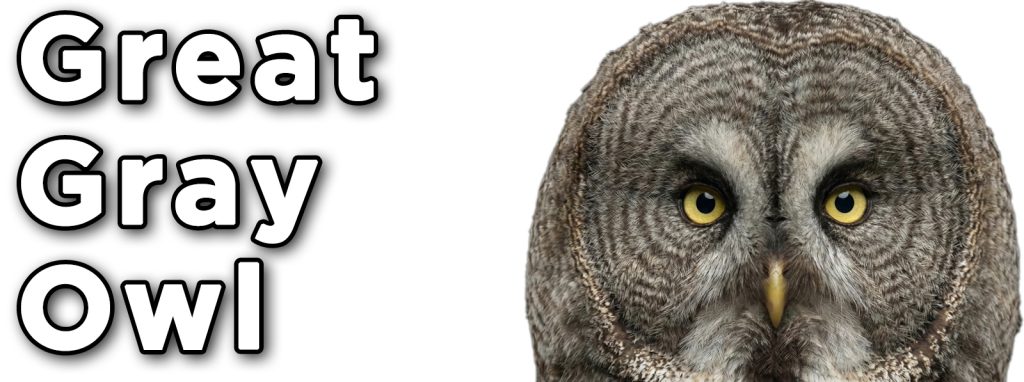
Name: Great Gray Owl (strix nebulosa)
Activity: Crepuscular (dawn & dusk), but active during the day in winter.
Best Time of Year: Mid-winter (Jan-March) when snow is deeper and they may travel south to hunt.
Habitat: During breeding season, they enjoy dense boreal forest and tamarack bogs. When they travel to Southern Ontario, they can also be found in woodland bordering open country.
Where to Look: They can be lower than you might expect, preferring low perches. Think fence posts, signs, or the lowest reliable branch on a tree. They’re very large owls, but their camouflage is excellent against lines of dark trees.
This is a real celebrity owl of the Ontario winter birding scene. The Great Gray is the tallest owl in North America, with a wingspan that can eclipse five feet. However, most of that mass is made up of a massive warm suit of feathers.
That feather insulation arms them against temperatures that drop below -40°C. But their most amazing tool is their face. That massive facial disc acts like a high-tech satellite dish, funnelling sound to their asymmetrical ears. They hunt almost exclusively by hearing, with sensitive hearing that is capable of detecting the scratching chewing sound or the friction sounds from the movement of a vole under two feet of crusty snow. When they lock onto a target, they drop like a stone, punching through the ice crust with their feet to grab prey they haven’t even seen. Seeing a Great Gray Owl is a bucket-list moment. Look out for the little white “bow tie” under their chin!
Extra Ontario Specific Tips To Find This Owl
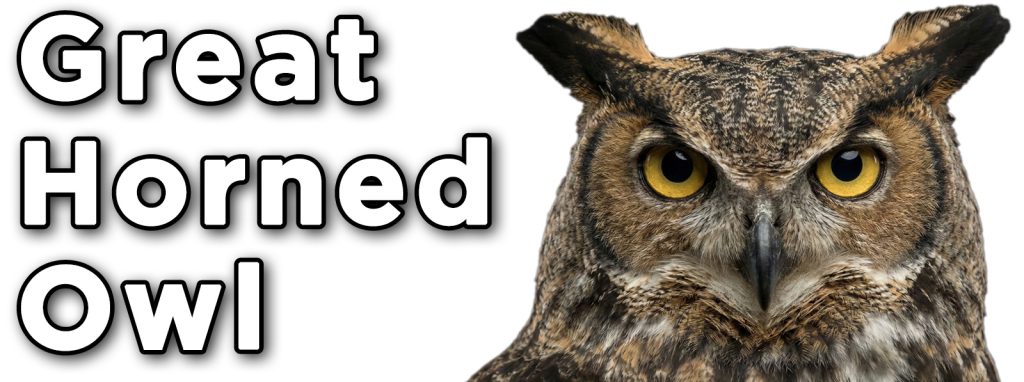
Name: Great Horned Owl (bubo virginianus)
Activity: Nocturnal, but often active at dusk
Best Time of Year: Mid-winter (Jan-Feb). They are very early breeders and nesters and they are one of the fun winter birding moments!
Habitat: They are ultimate generalists. All they need is big, mature trees and a supply of food. From forests to city parks, they can be found in a wide range of places.
Where To Look: They roost high up in large conifers (pines, spruces) to hide from mobbing birds. Look for a large, brownish “blob”, but it can take some patience and luck. During nesting, they can make use of old hawk nests or large tree cavities. Listen and look out for OTHER birds mobbing this owl species – Blue Jays and Crows, for example, can give away a roosting Great Horned Owl.
One of the most ferocious and powerful raptor in our woods. Their grip strength is terrifying! (approx. 500 psi). This is strong enough to sever the spine of large prey instantly. Skunks are one of their favoured prey, so if you smell skunk spray on an owl prowl, you might actually be smelling a Great Horned Owl that just had a pungent meal.
They are lazy homeowners! Great Horned Owls do not build their own nests. Instead, they will commandeer old Red-tailed Hawk nests, Crow nests, or even Squirrel dreys. They are also incredibly tough parents; they start nesting in the dead of winter. If you see those distinct ear tufts sticking up from a nest in February, you are looking at one of the toughest mothers in nature.
Extra Ontario Specific Tips To Find This Owl
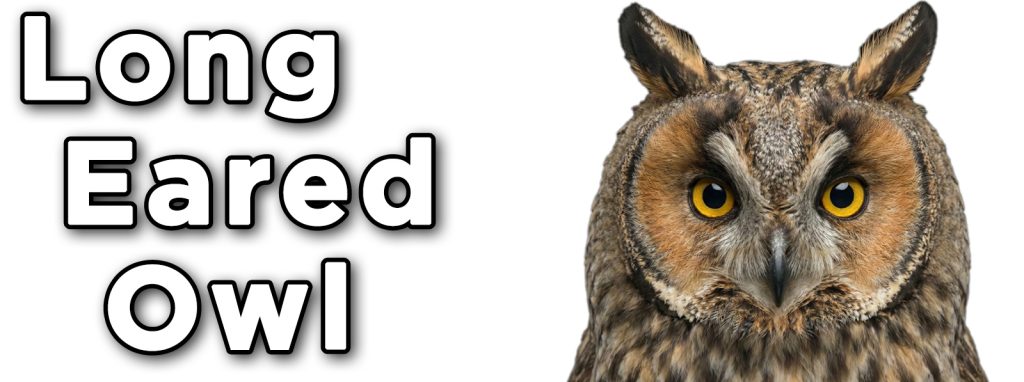
Name: Long-eared Owl (asio otus)
Activity: Nocturnal – they rarely fly during the day unless flushed by a predator or by people getting too close.
Best Time Of Year: Winter. They form communal roosts, making them easier to spot.
Habitat: Very picky. The densest, darkest, messiest tangle of trees they can find. Think cedar thickets, young pine plantations that are almost impenetrable. Like Homer Simpson disappearing into a hedge.
Where To Look: The deep, dark middle of cedars and pines. Combined with their brown cedar-like camouflage, these owls are incredibly well hidden. It’s one of the species that might be easier to find by looking for white-wash under and on potential roosting trees.
Long-eared Owls are incredibly secretive, but simultaneously, very social during the winter. If you find one, there are likely five, six, seven or more other individuals roosting somewhere nearby. This is why they are easier to find in the winter, as they break off into mating pairs later in the year and become much harder to find.
Superficially, they look similar to the Great Horned Owl (see the photo in the entry above to compare them), but the Long-eared Owl has a redder face and longer tufts that are closer together forming more of a ‘V’ shape. It gives their face more of a surprised look!
Extra Ontario Specific Tips To Find This Owl
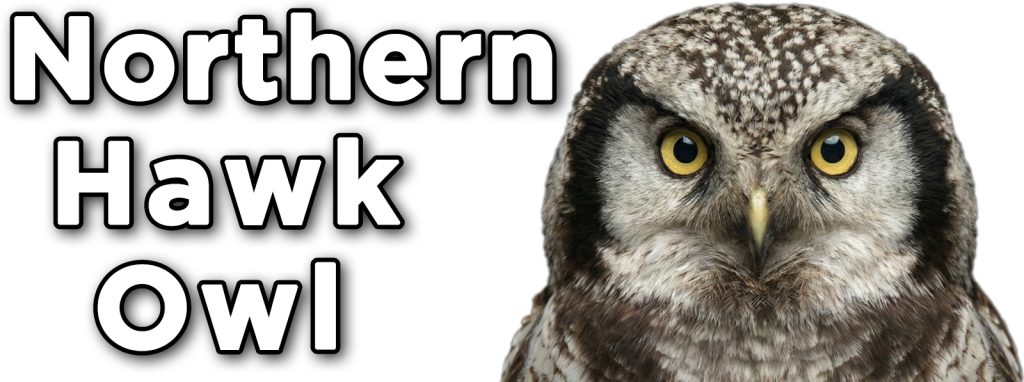
Name: Northern Hawk Owl (surnia ulula)
Activity: Diurnal (active during the day)
Best Time of Year: Winter
Habitat: This is a northern species that only travels into Southern Ontario when food is scarce. They like large open areas and will sit in high perches. In this north, this might be trees near muskeg (peat bogs) and in the south, trees or utility poles near open fields.
Where to Look: Up! They perch high and survey the area, much like a hawk
The bird with an identity crisis. The biology of an owl, with behaviours similar to a hawk. While other owls are reclusive and often active at night, the Northern Hawk Owl is out there boldly hunting by day. Unlike its owl cousins, it hunts primarily by sight rather than sound.
When the Northern Hawk Owl takes flight, it flies fast, direct, and with a long, pointed tail that isunique among our owls. It doesn’t have the silent flight feathers of other owl species – it doesn’t need them. It uses brute speed to catch its prey.
Extra Ontario Specific Tips To Find This Owl
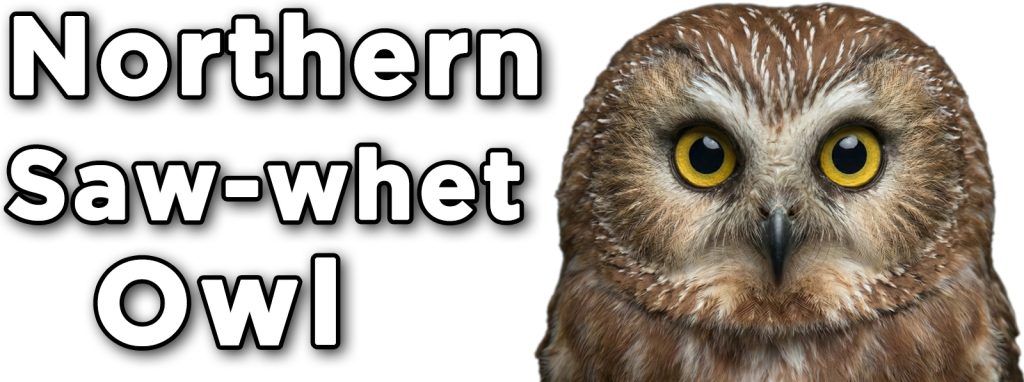
Name: Northern Saw-whet Owl (aegolius acadicus)
Activity: Nocturnal
Best Time of Year: Winter through spring. Their “toot toot” song can be heard into spring.
Habitat: Dense coniferous woods, cedar swamps, and pine plantations. Thick cover protects them from larger predators.
Where to Look: They roost around eye-level. Another owl that can sometimes be easier to find by looking for signs like small pellets and white-wash near their roost.
The smallest owl in Eastern North America. Their size together with their tendency to roost deep within the cover of conifers, makes them tough to find. It’s a common enough species that you can find them with perseverance and a bit of luck!
They make use of such dense cover, because they are susceptible to other owl species like Barred and Great Horned Owls. Closer to spring, you might hear their repetitive call. It sounds a bit like a truck backing up or someone playing the same note on a recorder. Meanwhile, early settlers thought that their alarm call sounded like a saw being sharpened on a whetstone – hence the owl’s name.
Extra Ontario Specific Tips To Find This Owl
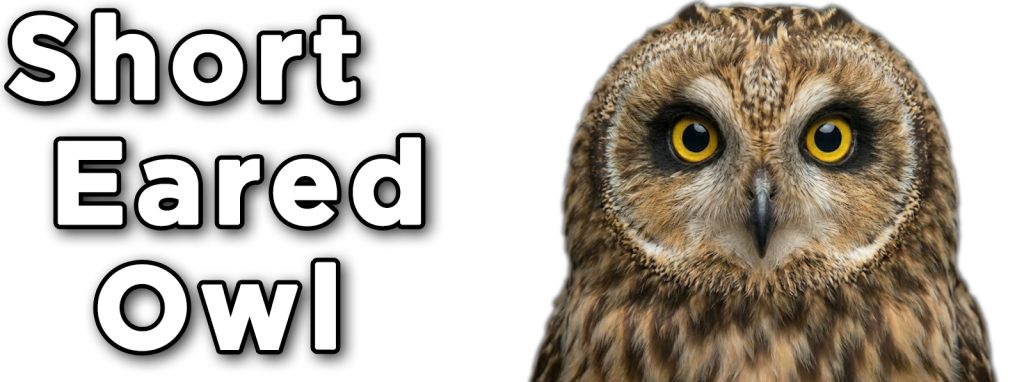
Name: Short-eared Owl (asio flammeus)
Activity: Crepuscular (dawn & dusk) but might hunt earlier afternoons on dull, cloudy days
Best Time of Year: Fall into winter when they come further south
Habitat: Wide open spaces, fields, meadows, even airports
Where to Look:Flying low over open fields, perched on handy lookout masts like fence posts
These owls emerge into the afternoon and early evening to patrol open fields for voles. They have an unusual “floppy” flight pattern as they fly low over grassy fields, that are often snow covered in winter. When they spot prey, they will often hover above it, before dropping down.
Short-eared Owls rarely show their tufts, usually just appearing quite round-faced. These owls are ground roosters and nesters, unlike most other Ontario owls (except the Snowy Owl), making use of grasses or reeds to hide.
Extra Ontario Specific Tips To Find This Owl
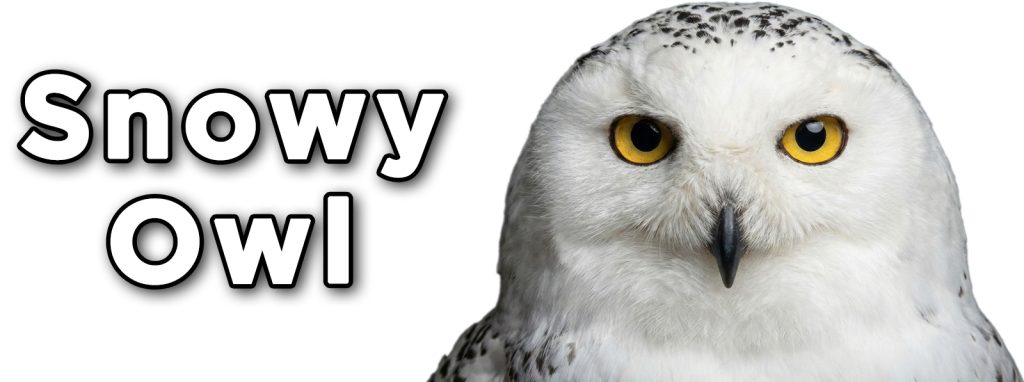
Name: Snowy Owl (bubo scandiacus)
Activity: Diurnal – hunts during the day
Best Time of Year: Winter. They only come south once the Arctic becomes hostile or food-scarce.
Habitat: Tundra-like habitat such as snow covered open fields, ice and snow covered lakes, airports etc..
Where to Look: Mostly on the ground as camouflaged lumps, but occasionally perched on fence posts, hydro poles and rocks. Rarely trees.
Another celebrity of the owl world, this bird has drawn thousands of non-birders to the hobby (thanks, Harry Potter). Snowy Owls breed on the high Arctic tundra, where they are perfectly adapted for the cold, with thick plumage that extends all the way down to their toes.
Yet another stark lesson in camouflage! Adult males can be almost pure white, disappearing completely against a snowy backdrop. Females and young birds (which we see more often in the south) are heavily barred with black, looking like “salt and pepper”. On breeding grounds, they can be quite aggressive at defending their territory. But further south, where there are more humans, they can be quite vulnerable to the large interest they can cause. Please be respectful and keep your distance from these owls. Don’t become a cause of controversy.
Extra Ontario Specific Tips To Find This Owl
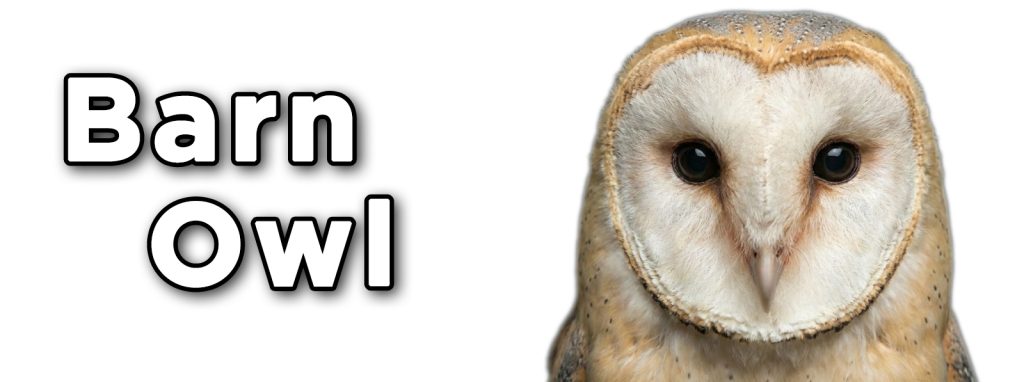
Name: American Barn Owl (tyto furcata)
Activity: Nocturnal
Best Time of Year: N/A (incredibly rare!)
Habitat: Open grasslands, marshes, and agricultural with old wooden structures for nesting (i.e. barns!)
Where to Look: The very south of Ontario is where they were historically found, but sightings are now very rare
We’ve included the American Barn Owl as a bonus bird and with heavy hearts. They are a southern species that struggles with our harsh winters, and the loss of traditional wooden barns and open grassland habitat has pushed them to the very brink in Ontario. They are critically imperilled in the province.
If you are lucky enough to see one, it is unmistakable. They have a distinct heart-shaped facial disc and ghostly pale plumage. Unlike the “hoots” of our other owls, the Barn Owl produces a blood-curdling, rasping scream reminiscent of ghost stories and horrors!
In 2024 the Barn Owl was split into two separate species. Our American Barn Owl and Western Barn Owl found in Europe and Africa.
Extra Ontario Specific Tips To Find This Owl (Note: Vague tips for a bird that’s almost impossible to see here – and we’ve never seen it)
Vagrants
There are a couple of species that very rarely show up in Ontario, but don’t breed here – they come by mistake because they get lost or blown off-course. There are occasional records of:
Burrowing Owl (athene cunicularia)
Northern Pygmy-Owl (glaucidium gnoma)
Start Your Own Search
We hope this guide helps you turn a few “empty trees” into lifelong memories. Remember, owl prowling is 90% patience, 10% luck, and 100% cold feet. But when you finally lock eyes with a Barred Owl in a silent forest, or spot a Snowy Owl drifting over a frozen field, you realize that the frostbite is a small price to pay.
Check out our video on all of these owl species.
